Tanzania Night Safari vs. Day Safari: Which One Is Right for Your Wildlife Photography?
You've spent months planning your Tanzania safari. You've got the gear, you've done the research, and you've booked the flights. But here's the question nobody tells you to think about until you're actually sitting in the jeep at 6 a.m.: Are you going to miss the best shots because you're doing safaris at the wrong time of day?
Day safaris and Tanzania night safaris give you very different wildlife photography experiences. Both are special and worth including in your Tanzania safari tour. If you’re a photographer, whether you’re just starting out or more experienced, these differences really matter. This blog post will help you decide by covering the best times for wildlife photography, what gear to pack, and how the dry and wet seasons affect what you’ll see through your camera.
Day Safari Photography: Golden Light, Big Action, and the Magic of Open Plains
A Tanzania day safari usually runs from about 6:30 a.m. to 6:00 p.m., with an early morning game drive and another in the afternoon. The first 90 minutes after sunrise are the best time for safari photography. The light is soft and golden, predators are still active, and there’s little dust in the air. Everything looks beautiful and dramatic, even without much effort.
In parks like the Serengeti and Ngorongoro Crater, this means lion prides returning from a hunt, cheetahs scanning the plains from termite mounds, and elephants moving toward water. The Ngorongoro Crater, in particular, is almost unfairly photogenic at dawn, steam rising from the soda lakes, flamingos silhouetted against the water, and the crater walls catching the first light in layers of amber and green.
Most photographers take a break at midday. Animals rest in the shade, the harsh light makes it hard to capture details, and heat waves can blur distant shots. A good guide, which is even more important than your gear, will use this time to get you in the right spot for the afternoon instead of just driving around.
Late afternoon is another great time for photos. From 4:00 to 6:00 p.m., animals start moving again, herds return to waterholes, and predators get active. The warm, glowing light at this time is perfect for animal portraits. That golden edge on a lion’s mane is the kind of photo that makes people want to visit Tanzania.
Tanzania Night Safari Photography: A Completely Different World
Most Tanzania safari itineraries don’t mention this, but Tanzania’s wildlife doesn’t stop when the sun goes down. The animals just change. At night, you’ll see a whole new set of wildlife.
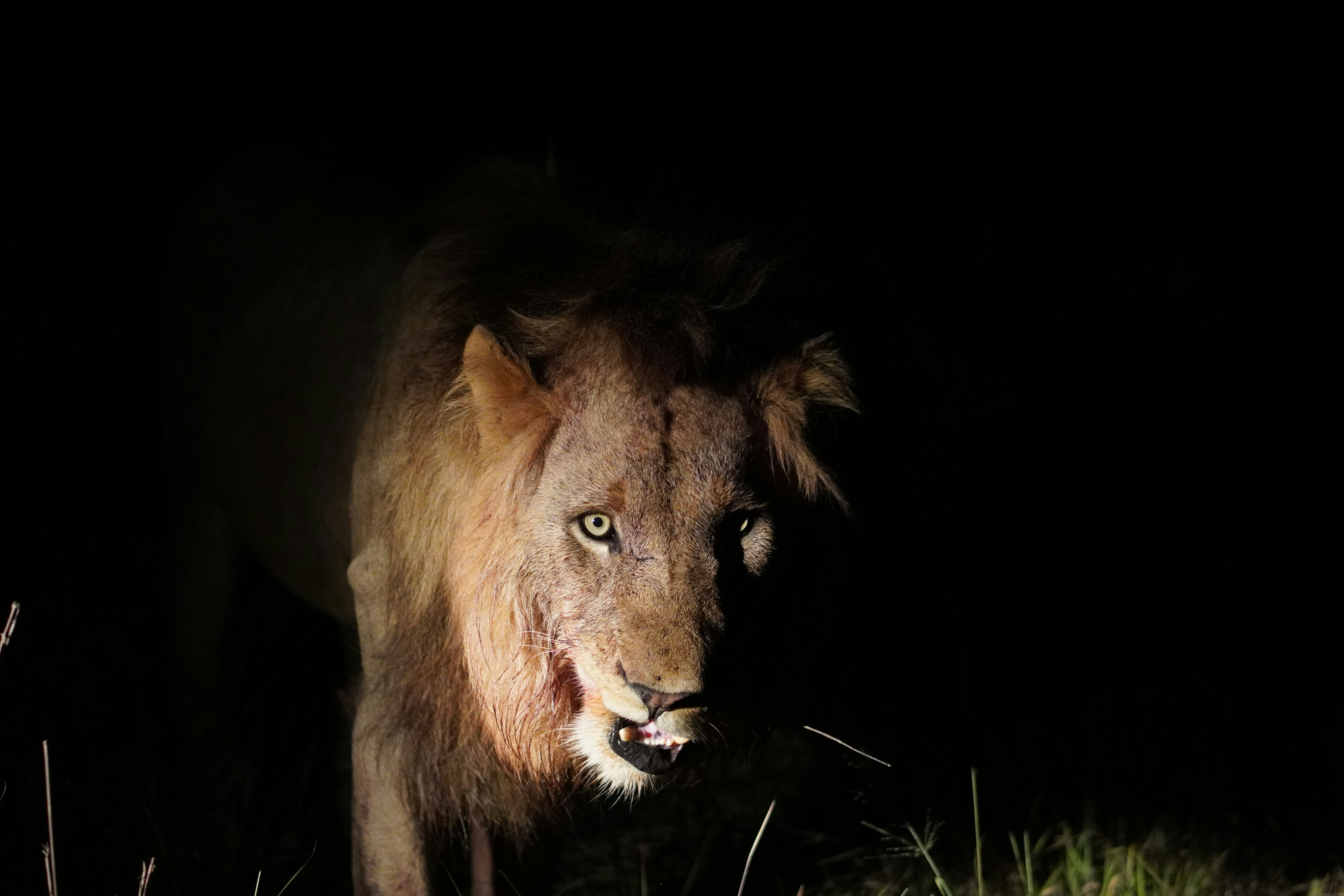
A Tanzania night safari typically runs from around 7:00 p.m. to 10:00 p.m. using a spotlight mounted on or handheld from an open safari vehicle. Not all parks permit night drives; the Serengeti and Ngorongoro Crater restrict them for conservation reasons, but several concessions and private reserves adjacent to the main parks do allow them. Tarangire's surrounding concession areas, for instance, offer some of the best night safari access in northern Tanzania.
What you'll encounter on a Tanzania night safari is genuinely unlike anything in the daylight hours. Leopards, which are notoriously secretive during the day, become far more visible after dark. Servals, Tanzania's medium-sized spotted cat, are hunted at night by most visitors in open grassland. Bushbabies appear in acacia trees, their eyes glowing back in the spotlight like tiny embers. Civets, porcupines, white-tailed mongooses, and bush pigs all emerge. If you're lucky, you'll find a leopard on a kill, which is one of the most intense Tanzania wildlife photography situations you'll ever be in.
Night photography is challenging. You’ll be working in low light, often with a moving spotlight, and animals move quickly and unpredictably. But the rewards are worth it. Capturing a leopard’s eyes in the light or a serval jumping in the moonlight are photos you can’t get during the day.
Best Time for Tanzania Wildlife Photography: Dry Season vs. Wet Season
Every photographer planning a Tanzania safari asks the same question: When is the best time to go? The truth is, it depends on what you want to photograph. Both the dry and wet seasons have their own unique advantages, and some of the best photos come from the season most people skip.
Dry Season (Late June to October): The Wildlife Photography Peak
The dry season is Tanzania's peak for wildlife photography for straightforward reasons: low vegetation, high animal concentrations, and predictable sightings. Without grass obscuring sightlines, you can photograph subjects at full body from meaningful distances. Animals cluster around the few remaining water sources, which means you can position your vehicle at a waterhole and let the wildlife come to you.
July through October in the northern Serengeti also brings the Mara River crossings, the most dramatic moment of the Great Wildebeest Migration. Hundreds of thousands of wildebeest and zebras plunge into crocodile-filled water in a chaos of dust, spray, and sound. For action photography, nothing in Tanzania competes.
The downside is the dust. During the dry season, dust can be tough on your camera gear and can make distant photos look hazy. Try to shoot during the golden hours, keep your lenses covered when not in use, and bring a good protective bag.
Wet Season (November to May): Tanzania's Best-Kept Photography Secret
Photography during the green season is truly special, and the landscape changes in ways most visitors never get to see. After the first rains in November, Tanzania’s parks become bright, lush green. The skies fill with huge clouds, and the afternoon light makes every photo look like a postcard.
January through March brings the wildebeest calving season to the southern Serengeti. Over 8,000 calves are born each day at peak calving, and predator activity, lions, cheetahs, wild dogs, and hyenas, is extraordinary. You'll photograph life-and-death moments constantly. And the crowds? Almost nonexistent.
The wet season is also the best time for bird photography by a significant margin. Over 200 migratory bird species arrive between November and April, including Eurasian rollers, yellow wagtails, European bee-eaters, and hundreds of shorebirds around the Rift Valley lakes. If birds are your primary subject, this is your season.
Safari Photography Gear List: What to Actually Bring
Let’s be honest. Many safari gear lists online are written by people who haven’t actually tried to photograph wildlife from a moving vehicle. Here’s what really matters for photography in Tanzania, based on real experience.
For Day Safari Photography
Camera body: A mirrorless or DSLR body with good autofocus tracking. Subject tracking performance matters far more than megapixels in this environment.
Lenses: A 100-400mm zoom covers 90% of situations. Bring a 24-70mm lens for landscapes and wide environmental shots. A 1.4x teleconverter adds reach without the bulk of a 600mm prime.
Bean bag: Leave the tripod at home. A bean bag on the vehicle roof or window is much steadier during a game drive and far more practical.
Dust protection: Dry season dust is relentless. A Rain Design sleeve or a simple ziplock bag around the camera body when not shooting makes a real difference.
Memory cards and batteries: Pack at least three times more than you think you’ll need. You won’t be able to buy good replacements in the parks.
For Night Safari Photography
Fast lens: An f/2.8 or faster lens is effectively mandatory. Night safari light levels are low, even with a spotlight, and you need to gather as much light as possible.
High ISO performance: Pick a camera that works well at high ISO settings. Shooting at ISO 6400 to 12800 is common during a Tanzania night safari. Make sure you know your camera’s limits before your trip.
Shorter focal length: A 70-200mm f/2.8 lens is often better than a 400mm lens at night. It’s easier to stabilize and gives you a bit more depth of field.
Red flashlight: For adjusting settings without destroying your night vision or disturbing wildlife.
Plan Your Tanzania Safari Photography Trip with KiliDestination
KiliDestination is a locally owned, non-profit tour operator based in Arusha, the gateway city to northern Tanzania’s national parks. For years, we’ve planned and guided Tanzania safari tours for photographers, wildlife lovers, trekkers, and first-time visitors from all over the world.
Our guides grew up in these areas. They know which places allow night drives, where to find leopards at dusk, and how to position the vehicle so the light helps your photos.
Want to combine a Kilimanjaro trek with your photography safari? That’s our specialty. Most of our clients climb Kilimanjaro for 7 days, then go on a 3 or 4-day photo safari right after. You’ll arrive acclimatized, already loving Tanzania, and ready to focus on your photography. Get in touch with us and tell us what you want to photograph. We'll build the rest.
Frequently Asked Questions
Is a Tanzania night safari worth it for photographers?
Yes, if you have the right gear and realistic expectations. A Tanzania night safari is the only way to photograph nocturnal animals like leopards, servals, civets, and bushbabies in their natural habitat. The photos you get at night are completely different from those you get during the day. It’s a technical challenge: you’ll need a fast lens (f/2.8 or wider), a camera with good high-ISO performance, and patience to work with a moving spotlight. But these are often the photos that stand out most from your whole Tanzania safari photography trip.
What is the best time for wildlife photography in Tanzania: dry season or wet season?
Both seasons are great for wildlife photography, but they offer different experiences. The dry season (late June to October) is best for action shots, the grass is low, animals gather at waterholes, and the northern Serengeti has the Mara River crossings during the Great Wildebeest Migration. The wet season (November to May) is best for dramatic landscapes, bird photography, and the wildebeest calving season in the southern Serengeti (January to March). There are also far fewer vehicles in the parks during the green season, which makes a big difference for your photos. Many serious photographers visit twice, once in each season.
What camera gear should I bring for a Tanzania safari?
For a Tanzania day safari, a 100-400mm zoom lens will cover most wildlife, and a 24-70mm is great for landscapes and wide shots. A bean bag works better than a tripod in a moving vehicle. For a night safari, you’ll need a fast f/2.8 lens and a camera that handles high ISO well (ideally up to ISO 6400 or more). Bring a lot more memory cards and batteries than you think you’ll need, since you can’t buy or charge them in the parks. During the dry season, protect your gear from dust by using a sleeve or bag when you’re not shooting.