Serengeti vs. Ngorongoro Crater: Which Park Should You Prioritize for Your Tanzania Vacation?
For avid travelers, planning a Tanzania northern circuit itinerary is the realization of a lifelong dream. You can almost see it: the golden savanna, the dust kicked up by thousands of feet, and the silhouettes of predators under flat-topped acacia trees. However, as you delve into the logistics, a challenging question arises: Serengeti vs. Ngorongoro Crater. If you are limited by time or budget, which one deserves your attention? Let’s unravel.
Both are UNESCO World Heritage sites, and both offer some of the best Tanzania safari park experiences on the planet. However, they are vastly different in scale, atmosphere, and wildlife behavior. Let us help you decide which park aligns with your safari goals.
The Landscape
The first major difference between these two icons is the physical environment. Each offers a visual narrative that stays with you long after you leave.
Serengeti National Park
The name "Serengeti" derives from the Maasai word Siringet, meaning "a place where the land runs forever." Spanning nearly 15,000 square kilometers, the scale of this national park is difficult to grasp until you are standing in the middle of it. It is an open, raw wilderness where the horizon seems to stretch into eternity, offering a vibe of untamed wildness.
Here’s a tip: keep your binoculars ready for kopjes (pronounced ‘kopees’). These are giant, ancient granite rock formations that rise like islands from a sea of grass. These "inselbergs" or island mountains are hundreds of millions of years older than the volcanic soil around them and serve as essential lookout points for lions and leopards scanning for their next meal.
Ngorongoro Crater
It’s nature’s Amphitheater. In a stark contrast, the Ngorongoro Crater is a collapsed volcano—a massive caldera—measuring only about 260 square kilometers. It is a closed ecosystem, with 600-meter-high walls that create a natural bowl overflowing with life. Often called an ‘African Eden,’ the Crater feels like a prehistoric sanctuary where animals live in a concentrated, high-definition display.
The view from the crater rim at dawn, with the thick morning mist clinging to the walls while the sun begins to illuminate the soda lakes below, is arguably the most breathtaking sight in Africa.
The Wildlife Viewing
When comparing the best Tanzania safari parks for wildlife, it is essentially a choice between spectacle and density.
Serengeti: Home of the Great Migration
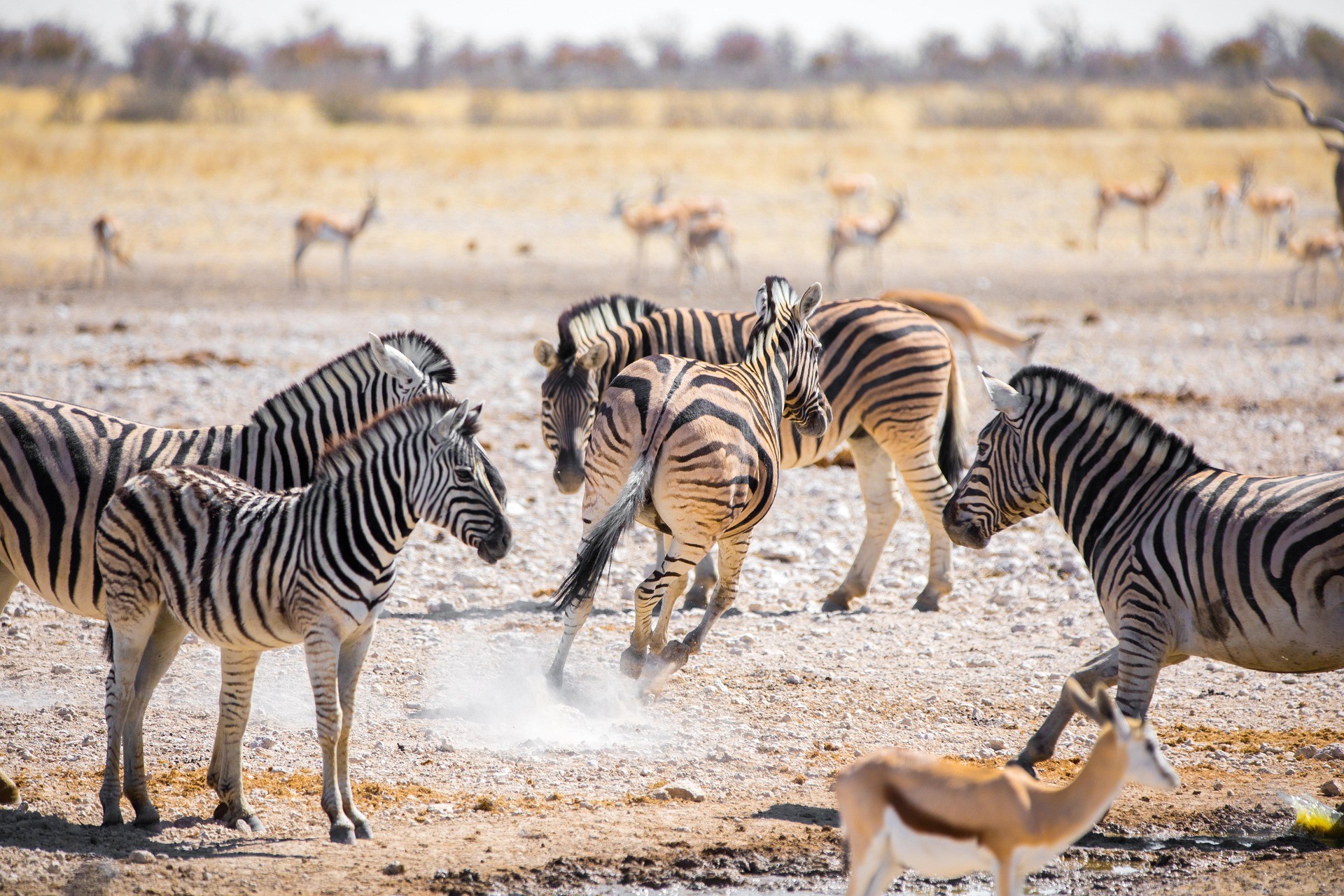
If witnessing the largest terrestrial mammal migration on Earth is your priority, the Serengeti National Park is a non-negotiable. Over 1.5 million wildebeest and 250,000 zebras move through this ecosystem in a never-ending cycle of life and death.
Because of these vast, moving herds, the Serengeti boasts the highest concentration of large predators, i.e., lions, leopards, and cheetahs, in the world. Wildlife here is spread out. Because the park is so vast, you need an experienced guide, like Kelvin, who understands the seasonal movements to track the herds across these immense distances.
Ngorongoro Crater: Guaranteed Big Five
For travelers who want to see the Big Five, Lion, Leopard, Elephant, Buffalo, and Rhino, in a single afternoon, the Crater is your best bet. This is one of the few places in Tanzania where you can reliably spot the endangered Black Rhino, often seen grazing near the Lerai Forest.
Interestingly, you will find no giraffes inside the Crater; their long legs and rigid necks make the steep 600-meter descent nearly impossible. Additionally, because the viewing area is so compact, the park can feel more crowded with vehicles than the open Serengeti.
Planning Your Tanzania Northern Circuit Itinerary
In a perfect world, you wouldn't choose; you would do both. Most high-quality Tanzania northern circuit itineraries are designed to complement each other by offering different paces.
We recommend starting with 1–2 days in Tarangire National Park, which is famous for its baobabs and massive elephant herds, moving to the Ngorongoro Crater for a high-intensity Big Five day, and finishing with 3–4 days in the Serengeti for an immersive, deep-wilderness experience.
The Crater is roughly a 3-hour drive from Arusha, making it very accessible. However, to reach the heart of the Serengeti, which is Seronera, expect an 8-hour drive or a 1-hour bush flight. For those on a tight schedule, flying into the Serengeti and driving back through the Crater is a popular way to save time.
Book with KiliDestination for a Wholesome Experience
Choosing the right park is only half the battle; the other half is choosing the right team. At KiliDestination, we are a 100% locally-owned company with deep roots in the Tanzanian soil. Our head guide, Kelvin, is an expert with over 10 years of experience navigating these terrains. He doesn't just drive you to animals; he reads the landscape to predict where they will be.
With Kelvin, you aren't just a tourist; you are a guest being shown the secrets of his home. We prioritize ethical treatment for our staff and provide the best value guarantee, ensuring that your safari is as impactful for the local community as it is for you.
Ready to see the best of Tanzania? Don't settle for a generic tour. Let Kelvin and the KiliDestination team show you the magic of the wild with a tailored Tanzania vacation.
FAQs
Can I see the Great Migration in the Ngorongoro Crater?
No. While the herds pass through the wider Ngorongoro Conservation Area, specifically the Ndutu plains during calving season in January & February, the millions of wildebeest do not descend into the Crater itself. To see the massive herds, you must visit the Serengeti.
Which park is better for photography?
It depends on your style. The Ngorongoro Crater is excellent for close-up portraits because the animals are habituated to vehicles and the landscape is lush. The Serengeti is better for action shots and dramatic, wide-angle landscapes, featuring the iconic acacia trees and golden light.
Is it worth visiting both if I only have 4 days?
Yes, but it will be fast-paced. We recommend a ‘Fly-in, Drive-out’ safari. Fly from Arusha into the Serengeti for 2 nights, then drive to the Ngorongoro Crater for a final morning game drive before returning to Arusha. This saves you 8 hours of driving and gives you the best of both worlds.