Why a Ngorongoro Crater Day Trip is the Best 12 Hours in Tanzania
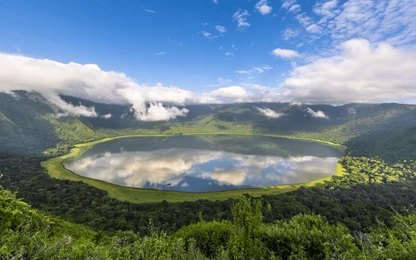
If you had just one day to experience Africa’s wild side, where would you go? Many would pick the Serengeti, but that doesn’t account for travel time. If you want to wake up, spot the Big Five, and return in time for dinner, Ngorongoro Crater is the place.
Often called the "Africa's Garden of Eden," this place isn't just a stop on a map; it’s a biological miracle. At KiliDestination, we’ve seen seasoned travellers, people who have been on dozens of Tanzania safari tours, stand on the rim of this crater and completely lose their breath. It’s that powerful.
A Ngorongoro Crater day trip is the most efficient safari you can take. For example, during one of our recent tours, within only the first hour after descending into the crater, our group observed a pride of lions basking in the morning sun, a herd of elephants moving quietly through the Lerai Forest, and a cluster of buffalo grazing by the marsh. In just 12 hours, you’ll see wildlife everywhere you look.
What Makes Ngorongoro Crater Unique Among Tanzania Safari Tours?
You might ask, "Isn’t it just a big hole in the ground? How is it different from the plains?" The difference is in its geography. The Ngorongoro Crater is the world’s largest inactive, intact, and unfilled volcanic caldera.
Millions of years ago, a huge volcano collapsed, forming a natural enclosure about 260 square kilometres wide. The 600-meter-high walls create a unique climate. While the surrounding area can be dry and dusty, the crater floor usually stays green and lush.
What really sets it apart from other Tanzania safaris is the number of animals that live here. Around 30,000 large mammals stay on the crater floor all year. With plenty of water and food, they don’t need to migrate. So, unlike the Serengeti, where you search for herds, in Ngorongoro Crater, the animals are always nearby.
Visiting Ngorongoro Crater is akin to entering a prehistoric time capsule, an immersive experience that illustrates why a day trip here offers the best encounter with Tanzania’s wildlife. Inside the crater, the encircling high walls separate you from the modern world, creating an environment where ancient fever trees and the persistent sounds of wildlife emphasize the unique continuity of life that distinguishes the crater from other safari destinations.
Can you see all the Big Five in One Day at Ngorongoro?
This is the gold standard for any safari, and the short answer is, YES, absolutely! In fact, this is arguably the only place in East Africa where you can reliably check off the entire list between breakfast and tea time.
On a Ngorongoro Crater day trip, the Big Five (Lion, Leopard, Elephant, Buffalo, and Rhino) are all residents.
Lions: The crater is home to one of the world’s densest lion populations. These lions are known for being very calm around vehicles. You might even see them napping in the shade of a parked Land Cruiser!
Elephants: The crater is home to some of Africa’s last "Great Tuskers," old bulls with tusks so long they almost touch the ground.
The Buffalo: You’ll see huge herds of these black tanks grazing near the marshes. They are the grumpy old men of the crater.
Leopard: This is usually the hardest animal to spot. Look carefully in the yellow-fever trees of the Lerai Forest. Leopards often rest there, sometimes with their tails hanging from the branches.
The Black Rhino: The crown jewel. While rhinos are nearly extinct in many parts of Africa, the enclosed nature of the crater makes them easier to protect and easier for you to spot. On a Ngorongoro Crater day trip, seeing a rhino trotting across the open plains is a very real possibility.
The Ngorongoro Crater vs. Conservation Area: What’s the Difference?
Many travelers find this confusing, so it’s good to know the difference before you visit.
The Ngorongoro Conservation Area (NCA) is a massive region (over 8,000 square kilometres) that includes the crater, the Olduvai Gorge, the Empakaai Crater, and vast stretches of highland plains. The Ngorongoro Crater itself is just one specific feature within that larger area.
The main difference is the people. Most national parks in Tanzania, like the Serengeti, don’t allow people to live inside. The Ngorongoro Conservation Area is different. It’s a ‘Multiple Land Use’ area, so the Maasai live here alongside wildlife.
As you travel to the crater rim, you’ll see Maasai villages and young warriors herding cattle. People aren’t allowed to live on the crater floor, but the Maasai can bring their cattle down for water and salt during the day. They must leave before nightfall.
When you book a Tanzania safari that includes the NCA, you get two experiences: amazing wildlife in the crater and a real cultural experience in the surrounding highlands. KiliDestination suggests that you do both!
What to Expect on Your Ngorongoro Crater Day Trip
A day trip moves quickly but is very rewarding. At KiliDestination, we always start early.
The Descent
Driving down the Seneto descent road is an adventure in itself. The road is steep and rocky, with wide views you have to see for yourself. As you reach the bottom, the air warms up, and you notice the scents of dry grass, damp earth, and sage.
The Ecosystems
You won’t just drive on flat dirt roads. We’ll take you through the Lerai Forest, where sunlight shines through the trees. Next, we visit Lake Magadi, the main soda lake. At certain times of year, flamingos gather around the lake. We also stop at Ngoitokitok Springs, where you can safely get out, watch hippos in the water, and enjoy a picnic lunch.
The Human Experience
We think a safari should be interactive, not just a lesson. Our guides are more than drivers; they are storytellers. They’ll share why crater lions have shorter manes, how the Maasai live with predators, and why the crater dust is really volcanic ash from ancient eruptions.
Why 2026 is the Year for the Crater
In 2026, more travelers are looking for meaningful experiences. People want to understand the ecosystem, not just see animals. Ngorongoro Crater is perfect for this. Furthermore, the introduction of new interpretive programs and guided educational tours in 2026 will enhance visitors’ understanding of local wildlife and conservation. Because it’s self-contained, you can watch the whole circle of life, from a cheetah hunt to a hyena scavenging, all in one afternoon.
We also focus on sustainability. We work hard to keep our day trips eco-friendly. We use well-maintained, low-emission vehicles and always follow ‘Leave No Trace’ rules at picnic sites.
Booking Your Adventure with KiliDestination
Visiting the crater is a bucket-list experience, but it helps to have local knowledge. You need to know which gate to use to avoid crowds, where rhinos were last seen, and how to follow park rules.
At KiliDestination, we love these 12-hour adventures. For many guests, this is the highlight of their trip, and we make sure it’s special. We handle everything: the 4x4 Land Cruiser with a pop-up roof, a professional English-speaking guide, park fees, and a tasty lunch, no soggy sandwiches, we promise!
We offer many Tanzania vacation packages, from trekking Kilimanjaro to exploring the Ngorongoro Crater. Whether you want a camping adventure or a luxury lodge on the crater rim, our packages are designed to show you the best of our home.
Ready to see Africa's Garden of Eden? Join KiliDestination for a day you’ll always remember. Let’s explore the crater together!
Frequently Asked Questions
Is a Ngorongoro Crater day trip too rushed?
Not at all! The crater floor’s compact area of 260 square kilometres ensures that you can observe a significant amount of wildlife within 6 to 8 hours. In fact, visitors typically encounter more animals during a single morning or afternoon in Ngorongoro Crater than they might after spending three full days in a much larger park such as the Serengeti, where wildlife is more widely dispersed.
Why are the park fees higher for the crater?
The Tanzanian government charges a "The Tanzanian government adds a "Crater Service Fee" to the regular park entry fees. This helps limit vehicles on the crater floor and protect the ecosystem. It’s an investment in conservation to keep the crater wild for future generations.
What should I wear for a day trip?
Dress in layers. The crater rim is high and can be cold and misty in the morning. Once you reach the floor and the sun is out, it starts to warm up. Bring a light jacket, a hat, and plenty of sunscreen.