Mount Kenya Trek vs. Kilimanjaro: Which African Giant Should You Climb?
You’ve made a big decision, you’re going to climb an African mountain. That’s an amazing choice. But now comes the question every trekker talks about: Mount Kenya or Kilimanjaro? Both are bucket-list adventures. Both will challenge you far more than any treadmill, and both offer views so stunning, you’ll forget your tired legs as soon as you reach the top.
The truth is, these mountains are very different, and the best choice depends on what kind of trekker you are. Let’s break it down clearly, with just the facts and some honest advice.
Mount Kenya Trek: Africa’s Hidden Gem
At 5,199 metres (17,057 ft), Mount Kenya is Africa’s second-highest peak and is often overlooked. While Kilimanjaro gets most of the attention online, Mount Kenya offers one of the most varied and dramatic trekking experiences in Africa.
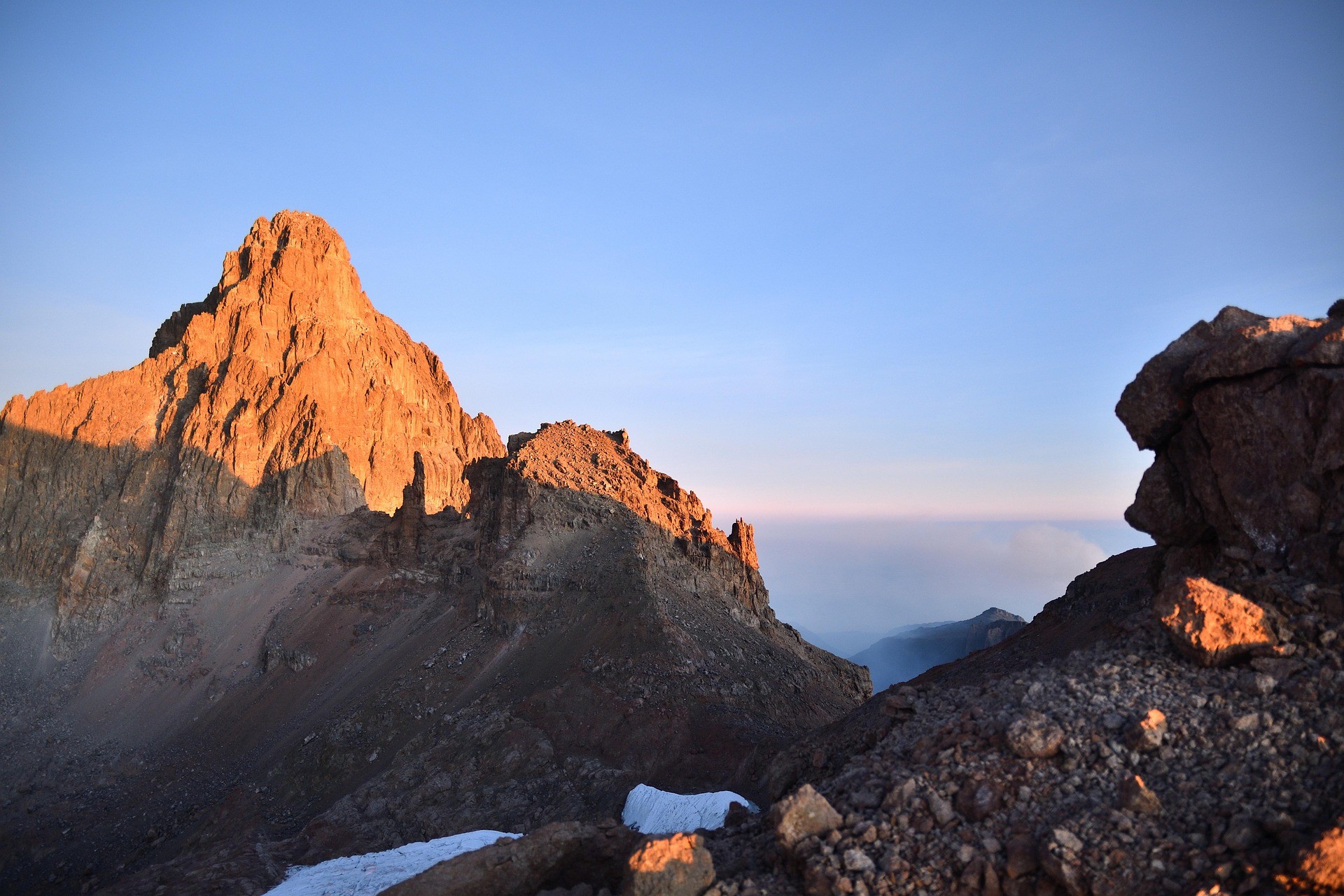
Mount Kenya sits right on the equator, so you’ll pass through a surprising range of ecosystems. You’ll start in dense forest, move into open moorland, then cross alpine desert, and finally reach the jagged volcanic peaks of Batian, Nelion, and Point Lenana, which is the main summit for trekkers at 4,985 metres. Batian and Nelion require ropes and climbing skills, but Point Lenana is reachable for fit trekkers without technical experience.
The main trekking routes are Naro Moru, Sirimon, and Chogoria, and each offers something different. Sirimon is the easiest and most scenic for acclimatisation. Chogoria is often called the most beautiful, taking you through Gorges Valley and past Lake Michaelson. Naro Moru is the quickest but also the steepest. Most people choose a 5–7 day circuit that combines these routes for the best experience.
How Hard Is It to Climb Mount Kenya?
To be clear, the Mount Kenya trek is not just a casual walk. But it’s also not as difficult or technical as some people think.
Here’s what to expect:
You’ll need to be in good shape. Expect long hiking days of 6 to 8 hours with a backpack, over uneven terrain, and at high altitude. This will challenge your endurance and leg strength. If you already jog, hike, or cycle regularly, you’re well prepared. If you haven’t exercised much lately, plan for 3 to 4 months of training before your trek.
Altitude is the main challenge. Point Lenana is just under 5,000 metres, and altitude sickness can affect anyone, no matter how fit you are. The mountain’s different routes help you acclimatise if you take your time. Headaches and mild breathlessness are normal, but serious symptoms like ongoing vomiting or confusion mean you should stop. Your guide will know what to look for.
You don’t need ropes, harnesses, or special equipment to reach Point Lenana. Good hiking boots, layered clothing, and trekking poles are enough. The last part of the climb, usually done before sunrise, involves some scrambling over rocks. It’s not technical, but it does require focus.
Overall, the trek is moderate to challenging. With good preparation and a knowledgeable guide, it’s very achievable.
Is Mount Kenya Harder Than Kilimanjaro?
This is a common question among trekkers. The short answer is that it depends on which summit you want to reach. The full answer is a bit more detailed.
Kilimanjaro’s Uhuru Peak is 5,895 metres high, which is 700 metres higher than Point Lenana on Mount Kenya. This extra altitude makes a big difference. The air at Uhuru is much thinner, and the final summit night on Kilimanjaro is a tough 6 to 8-hour climb up loose rock in freezing darkness. Many people say it’s one of the hardest non-technical climbs in the world. About 65% of climbers reach the top, and most who don’t are stopped by altitude, not fitness.
Point Lenana on Mount Kenya is lower and is usually considered a bit easier to reach at the summit. However, the terrain on Mount Kenya is more varied and requires more attention each day. The trails are often rougher and less maintained, so you need to pay more attention to navigation. In contrast, Kilimanjaro’s routes, especially Marangu, are well-used and easier to follow.
Best Time to Climb Mount Kenya
Choosing the right time for your Mount Kenya trek can mean the difference between a great experience and a difficult, muddy climb. Here’s what you need to know:
January-February: It is widely considered the best time to climb Mount Kenya. The long dry season delivers clear skies, stable weather, and excellent summit visibility. Temperatures are cold at altitude but manageable, and trail conditions are at their best. This is peak season for good reason.
July-October: It is the other prime window, corresponding with the short dry season. The weather is reliably good, making it the second-best time to attempt the mountain. Wildlife in the surrounding forest zones is also particularly active during this period.
March-June: The long rains bring heavy rain, muddy trails, and poor visibility, making summit attempts much harder. It’s possible to climb, but not recommended unless you are very experienced and enjoy tough weather.
November-December: It is the short rainy season. The rain is less heavy than during the long rains, but the weather is still unpredictable. Some experienced trekkers go at this time, but it can be risky.
The Kilimanjaro Advantage: Why Kili Still Wins for Most Trekkers
To be honest, Kilimanjaro is hard to resist. It’s the highest peak in Africa and one of the Seven Summits. You don’t need technical climbing skills, and standing at 5,895 metres, looking down at the clouds, is an experience you won’t find anywhere else.
For first-time high-altitude trekkers, Kilimanjaro is often the best choice because the infrastructure is excellent. The routes are well marked, huts and campsites are set up, and the guiding industry in Tanzania, especially in Arusha, is experienced and reliable. You’ll be well taken care of.
We especially like the Lemosho and Machame routes. They are longer, which helps your body acclimatise and offers some of the best scenery on the mountain. If you have more time, the Northern Circuit is the longest and most impressive, taking you all the way around Kilimanjaro.
Why Not Do Both? The East Africa Twin Peaks Challenge
Many experienced trekkers now choose to climb Mount Kenya first for acclimatisation, then travel to Tanzania to climb Kilimanjaro. The two mountains are only a few hundred kilometres apart, and together they make for an incredible adventure.
This approach makes sense. Spending 5 to 7 days at altitude on Mount Kenya before climbing Kilimanjaro helps your body adjust. Your red blood cell count increases, your lungs adapt to the thin air, and you become more comfortable with high-altitude trekking. Many experienced climbers recommend this strategy.
Add a safari to your trip, and you’ll have an adventure that many people dream about for years.
Book Your Mount Kenya Trek or Kilimanjaro Adventure with KiliDestination
This is where we can help. KiliDestination has been guiding trekkers in East Africa for years. We are a locally owned, non-profit group based in Arusha, Tanzania. Our guides know these mountains well because they grew up nearby. Kilimanjaro is our specialty, but we have experience throughout the region and have helped hundreds of climbers reach summits they once thought were out of reach.
Whether you want to climb Mount Kenya, summit Uhuru Peak on Kilimanjaro, or combine both mountains into one big East Africa trip, we’ll create an itinerary just for you. We offer small groups, experienced local guides, fair prices, and no unexpected costs on the mountain.
If you want a full East African adventure, our Tanzania vacation packages combine Kilimanjaro treks with top safaris in the Serengeti, Ngorongoro Crater, and Tarangire. This way, you can reach a summit and see the Great Migration in one trip. It’s an easy choice.
Ready to start planning? Contact our team directly.
Frequently Asked Questions
Do I need a guide for the Mount Kenya trek?
Yes, you do need a guide, and not just for safety, although that is the main reason. Mount Kenya National Park requires all trekkers to register and have a licensed guide. Besides the rules, the routes can be confusing in bad weather, and altitude sickness can become serious without someone trained to help. A good guide also greatly increases your chances of reaching the summit. They know the weather, the best pace, and how to manage a group at altitude. Don’t skip the guide to save money. It’s not worth the risk.
What is the best time to climb Mount Kenya for clear summit views?
January and February usually have the clearest skies and most stable weather on Mount Kenya, making them the best months for summit views. July to October is the next best period. During these dry seasons, you’re most likely to reach Point Lenana at sunrise and enjoy the view, which is the goal after days of trekking. Avoid the long rains from March to June if you want clear views and dry trails.
Can I combine a Mount Kenya trek with a Kilimanjaro climb in one trip?
Absolutely, and many experienced trekkers do this. The two mountains are close together. Mount Kenya is in Kenya, and Kilimanjaro is in Tanzania, so combining them in one East Africa trip is both practical and smart. Climbing Mount Kenya first helps you acclimatise before facing Kilimanjaro’s higher altitude. Be sure to allow time for travel between countries, take at least 2 to 3 rest days between climbs, and plan enough days for your body to adjust. Add a Tanzanian safari, and you’ll have the adventure of a lifetime. We can help you plan the whole trip.